Rail-to-Trail Recreational Path
Hammondsport, NY
Fall 2015
Design Connect is a community design project team. Every semester, groups of students work with local Upstate New York communities and governments in order to create design proposals and consulting services for underutilized sites. These projects place an emphasis on community engagement, sustainable practices, and design-thinking. I have worked on five projects through Design Connect. Of these, two are currently being built while another is undergoing approval. The Hammondsport Rail-to-Trail Recreational Path is currently undergoing construction.
Site Analysis & Research-
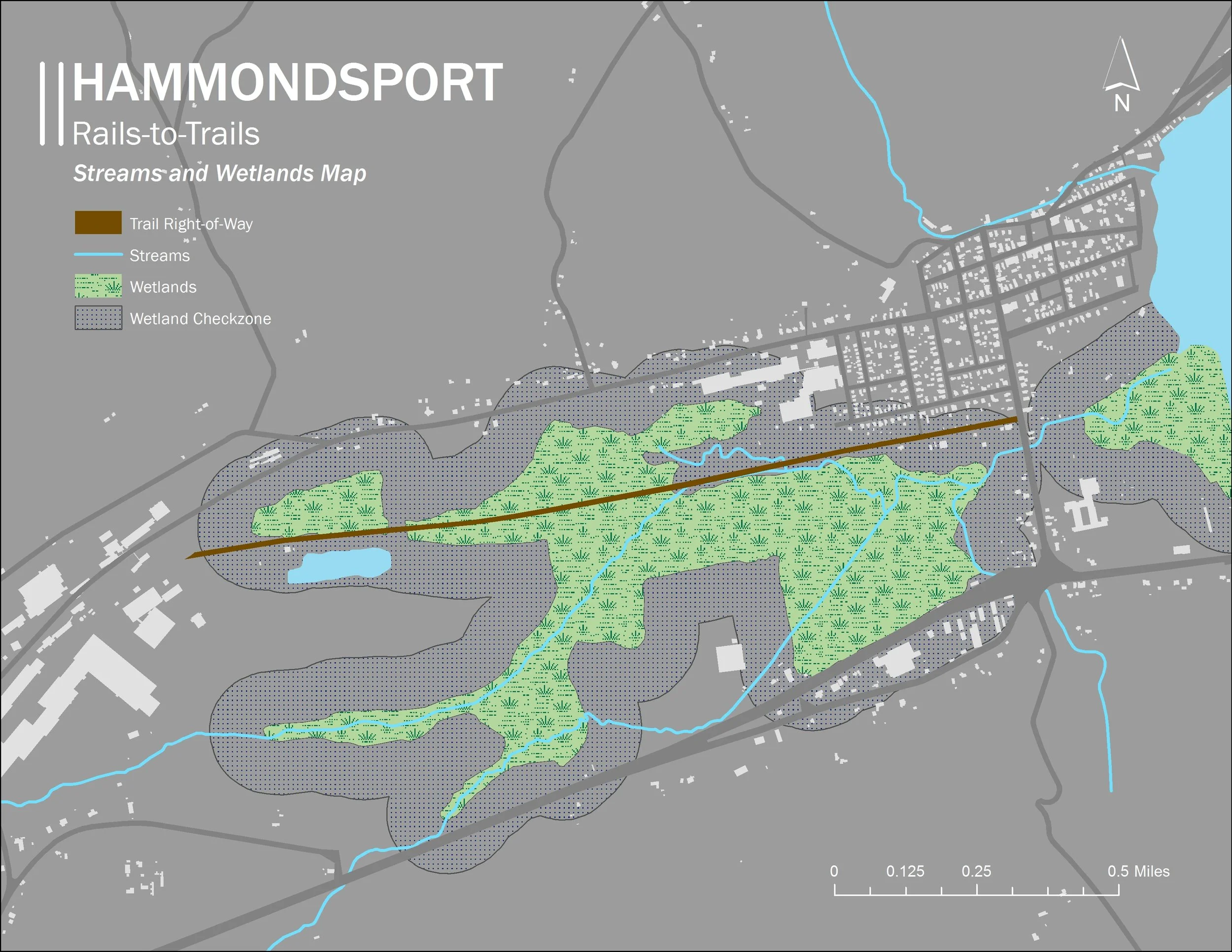
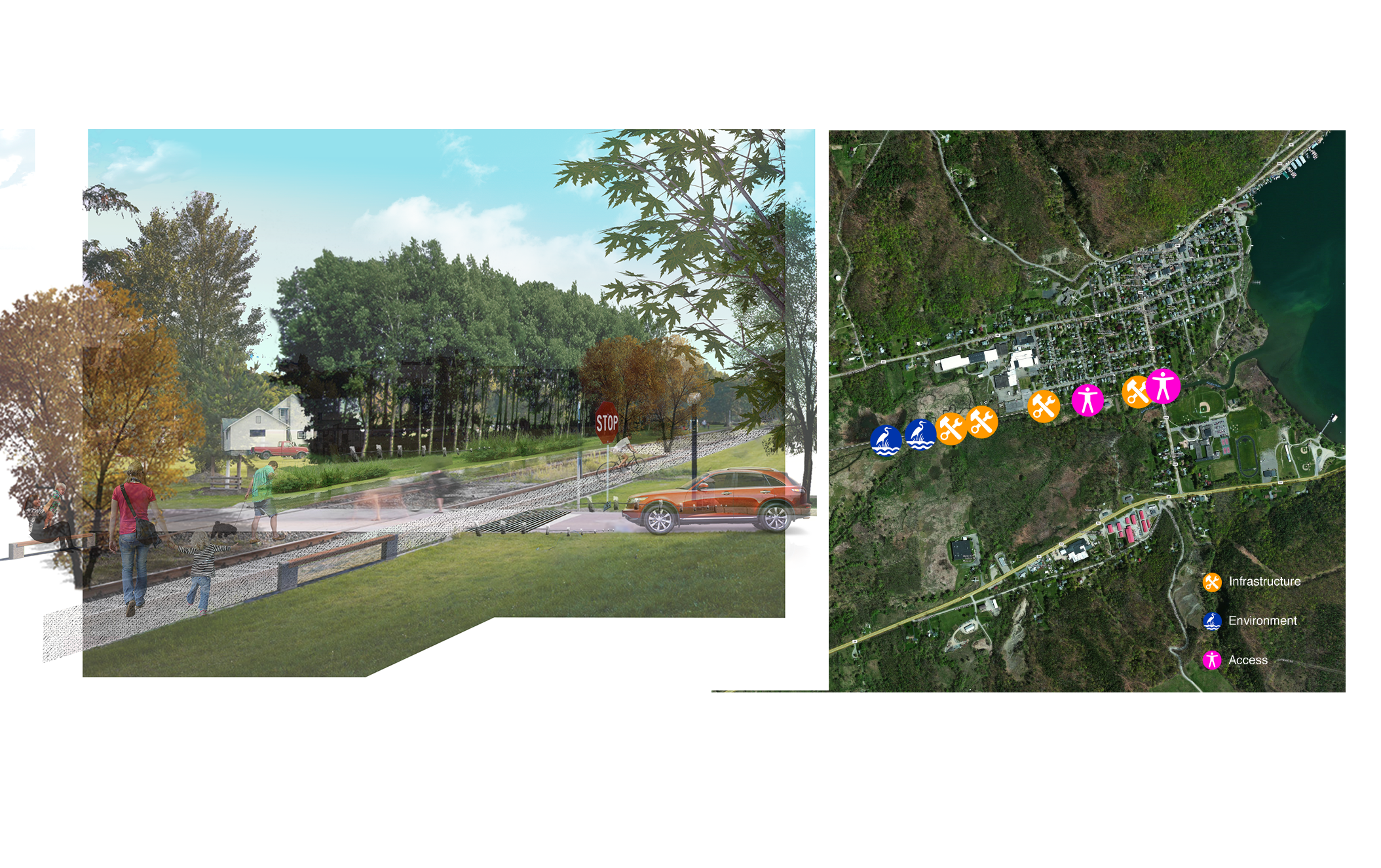
The Friends of Hammondsport, a non-profit development organization, identified the out-of-commission rail-road tracks that ran through Hammondsport as a site for the development of a recreational wellness trail that would also bring connectivity to the region. To ground the site analysis, I compiled a collection of case studies of regional wellness and rail-to-trail projects and performed a parcel analysis of the properties along the trail. We made several site visits, hiking along the overgrown wildlife that had taken over the rail right-of-way. Because this was a wetland site, we also had to perform a environmental impact analysis of the region, which is mapped in the GIS map below.
Community Engagement & Design Charrette-
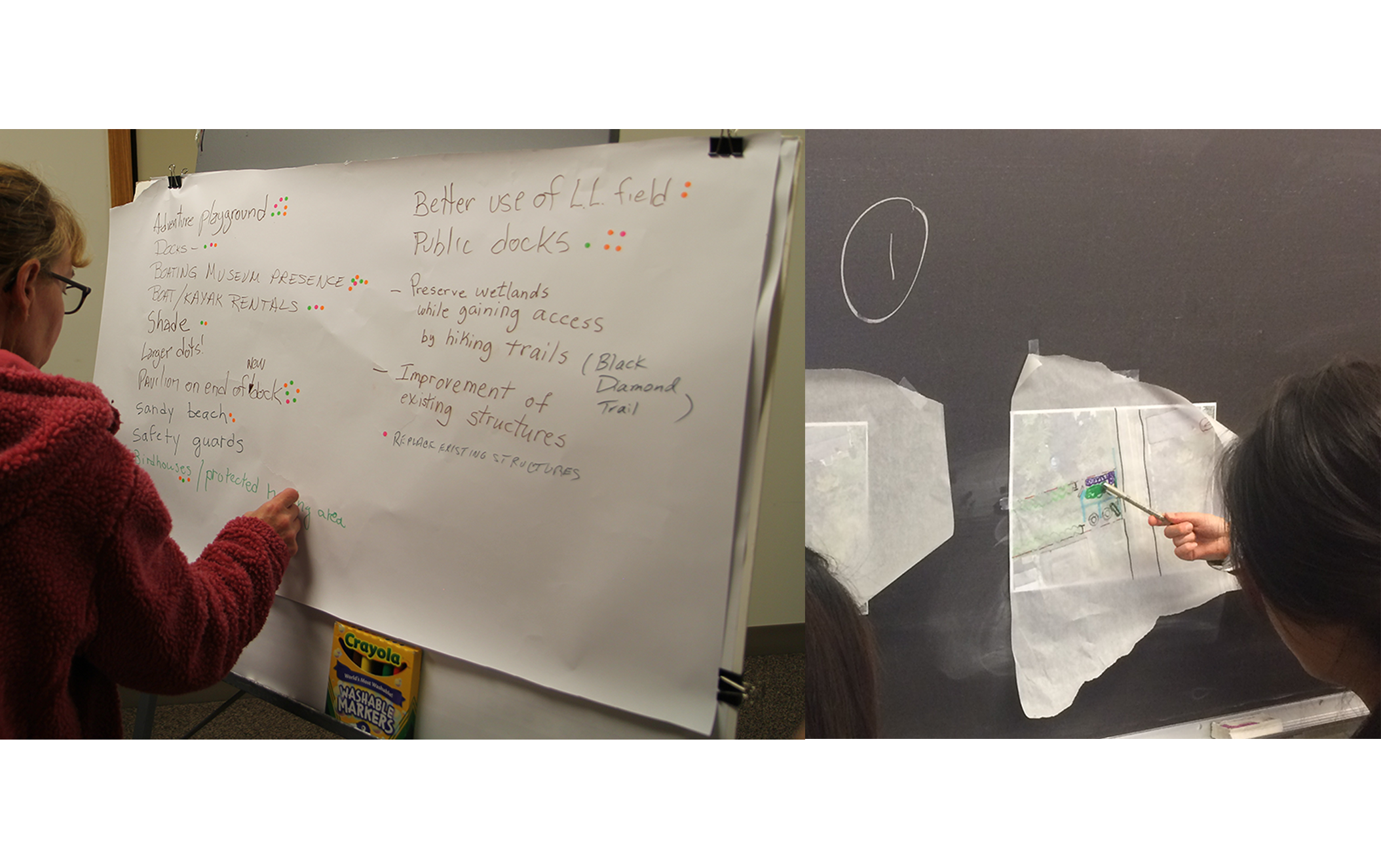
In order to gain an understanding of the existing role the site played in the community as well as what stakeholders envisioned of the site, my team and I facilitated a community meeting and charrette. Through a series of interactive exercises and conversations, we learned that the residents of Hammondsport took pride in their local aviation history and wanted to place an emphasis on historical integration into physical trail-markers throughout the trail as well as in geographic connectivity to the aviation museum. In addition, we learned that many of the residents of Hammondsport were elderly and that accessibility to the trail was a top priority.
Through this meeting we were able to learn about the people we were designing for and create relationships where there was previously conflict. We met with many of the stakeholders who owned property that backed against the rail-to-trail, and were able to have productive conversations about privacy and right-of-ways.
Design Proposal & Feasibility-
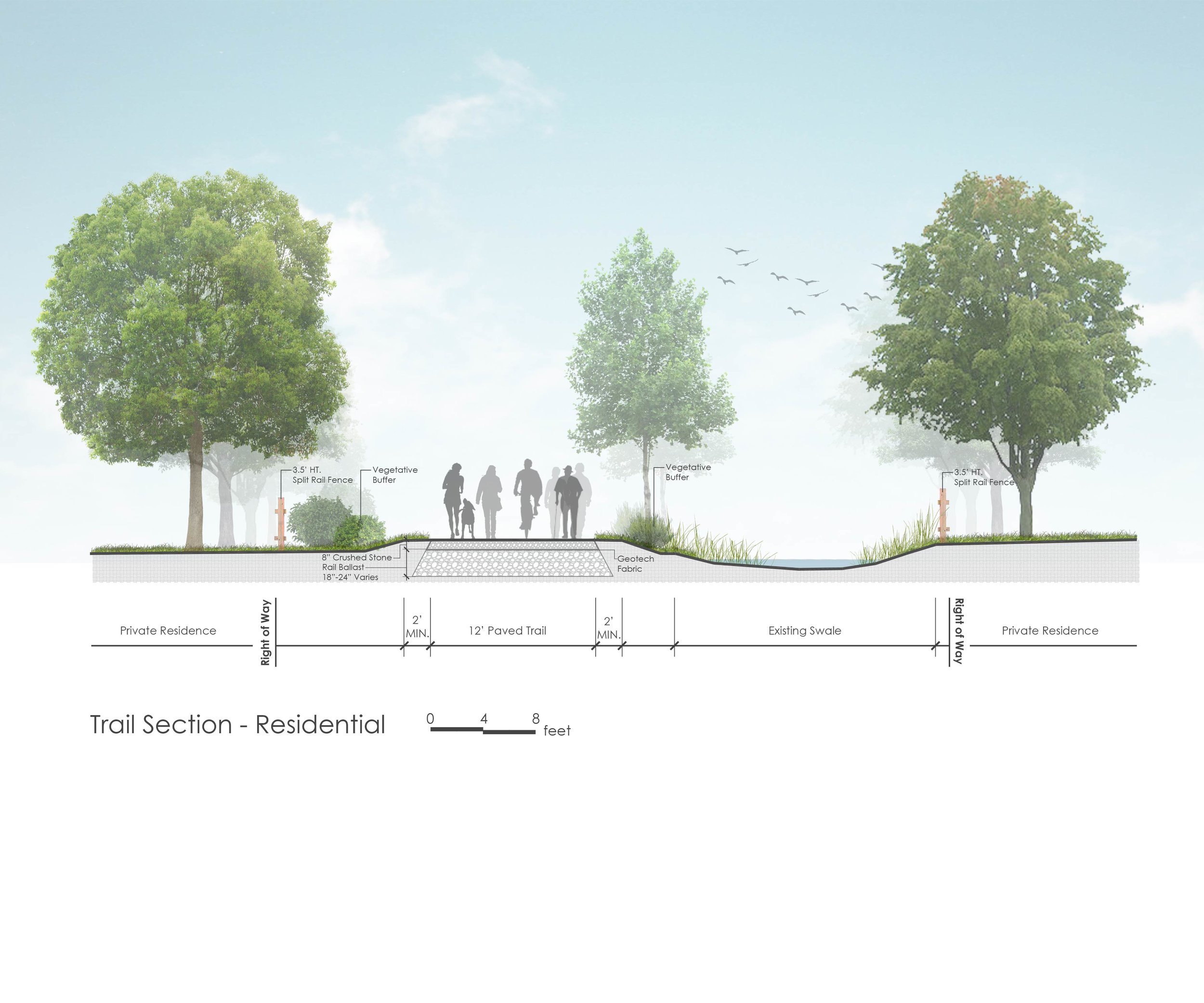
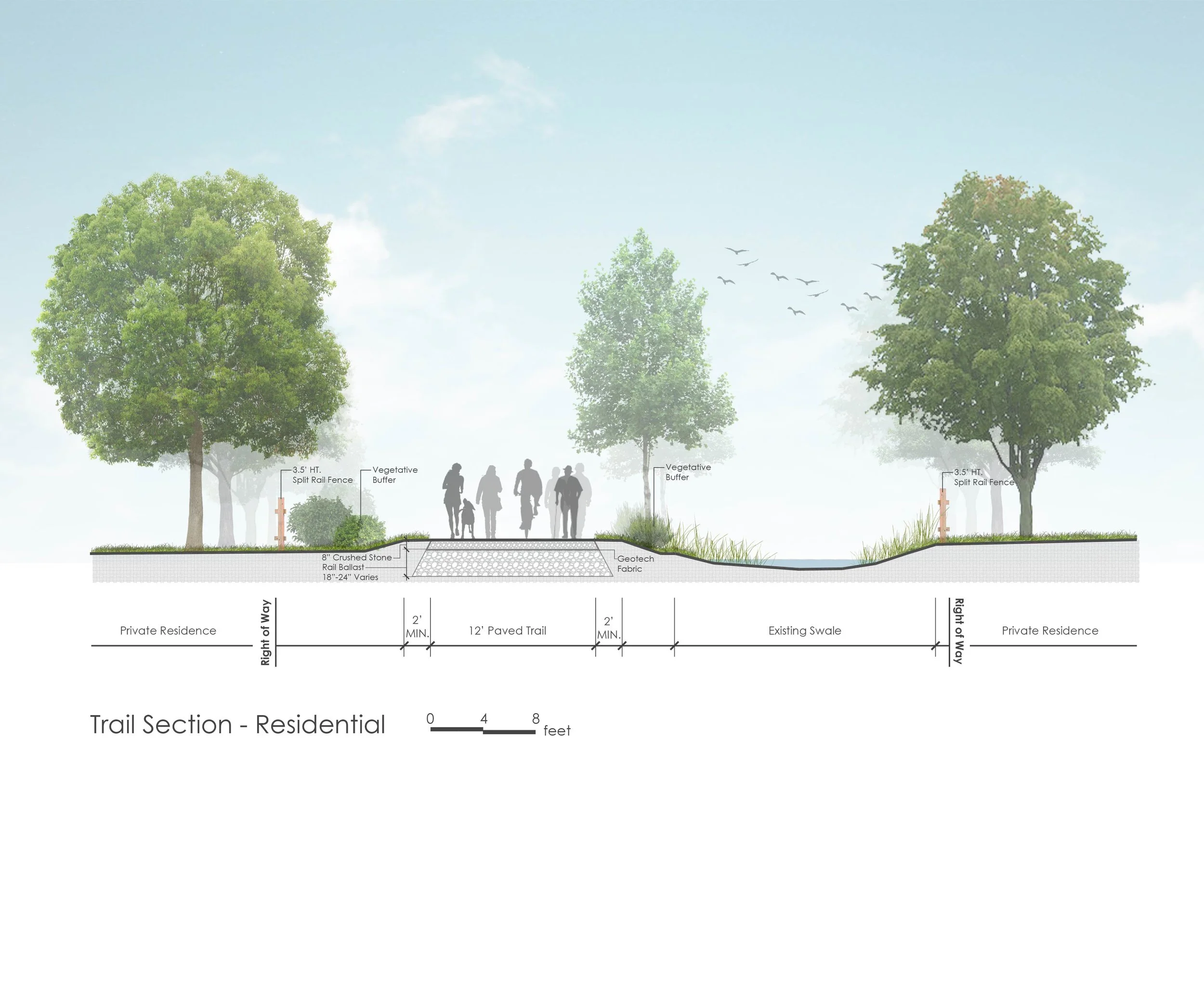
Drawing from our community meetings we were able to narrow down the goals of our design to three things: access to nature, local history, and connectivity. In our design we focused on a combination of highlighting landmarks, incorporating preserved railroad tracks into the trail, and implementation of wayfinding signage. We also explored the trail's role as a greenway and ensured that the path and materials used were friendly to both bikers and pedestrians. In order to reduce impact on protected wetlands and increase accessibility to the nature Hammondsport has to provide, we recommended elevated wooden bridges. Lastly, we proposed strategic landscaping that would create a sense of distinction between public and private spaces, allowing private property owners the delineation they advocated for.
We received very positive feedback from the Friends of Hammondsport who were able to use our proposal materials to apply for grants and begin construction.
Takeaway-
In this project I gained many technical skills which included rendering in Photoshop, creating attractive maps through ArcGIS and Illustrator, and performing environmental impact analyses. However, one of the most valuable skills I gained from this project was learning how to effectively engage communities and local government. I learned the power of being able to clearly communicate concepts both internally, within a multidisciplinary team of architects, planners, and engineers, and externally, translating jargon-y design concepts to everyday people. I learned that when it comes to your own neighborhood, everyone is an expert and has a valuable story to tell.